Author: Josh Toupos

Sorceries or Salvation—Which Shall It Be?

By Ray Yungen

God’s Desire

Just what exactly is God’s desire for mankind? Does He want to send people to Hell? Does He want anyone to live eternally without Him? Scripture is very clear about this when it says:

The Lord is not slack concerning his promise, as some men count slackness; but is longsuffering to us-ward, not willing that any should perish, but that all should come to repentance. (2 Peter 3:9)

God makes a strong plea to all people, giving them every opportunity to receive Him. It is God’s desire that none should perish eternally. That’s why He offered His Son, the Lord Jesus Christ—the only perfect sacrifice for mankind’s sin:

Therefore as by the offence of one [Adam] judgment came upon all men to condemnation; even so by the righteousness of one [Jesus] the free gift came upon all men unto justification of life. (Romans 5:18)

What it comes down to is the preaching of the higher self (as taught in contemplative spirituality) versus the preaching of the Cross. The New Age says that God is the higher self in man—that God is just a meditation away.

Many people are turned off when they think Christian teaching says we are bad and worthless. But this is not an accurate depiction of Christianity. It may teach that man is bad  (i.e., sinful) (which is evident) but certainly not worthless. The fact that Christ died for the “ungodly” to “reconcile” them to God shows God’s love toward man. In contrast to karma, the Gospel of grace is better in that if you accept its provision, you are complete (perfect) in Christ Jesus.

This is why Christianity is so steadfast on these issues. If a belief system is not preaching the Cross, then it is not “the power of God” (1 Corinthians 1:18). If other ways are correct, then Christ died in vain, His blood shed unnecessarily.

A Warning and a Plea

It is very true that God loves mankind, so much so He sent His Son to save all who receive Him by faith. The Lord is very patient with man, and as “the day of the Lord” draws nearer and nearer, He continues beckoning humanity to Himself.

However, while God’s love, mercy, and patience are very enduring, His warnings about a great judgment coming upon the earth are to be taken very seriously. Those who refuse to bow their knee to Jesus Christ will suffer severe and eternal consequences—make no mistake, that day will come:

But the heavens and the earth, which are now, by the same word are kept in store, reserved unto fire against the day of judgment and perdition of ungodly men. (2 Peter 3:7)

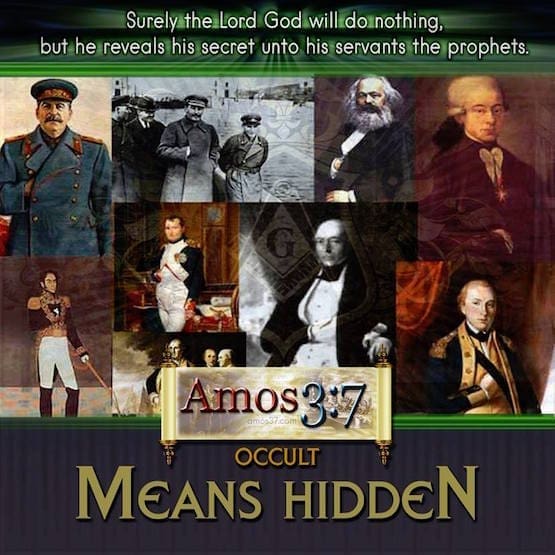
Jesus said, in referring to His return “of that day and hour knoweth no man” (Matthew 24:36). But He also said that while we will not know the exact hour and day of His return, we should be watching for the signs of the coming tribulation period. Throughout the centuries, Christians generally thought they were living in a time when Christ’s return was imminent based on natural disasters, wars, upheaval, and prominent military leaders (e.g., Napoleon). But never in the history of humanity has occultism and mysticism been unleashed as it has now.

Many think that the New Age movement is only a fairly recent manifestation of the last few decades. But I believe that the words of the prophet Isaiah reveal that New Age spirituality was even around back then, although not called that. And he links this Ancient Wisdom in with the end of the age period. Isaiah issues a stern and fearsome warning:

Stand now with thine enchantments, and with the multitude of thy sorceries, wherein thou hast laboured from thy youth, if so be thou shalt be able to profit, if so be thou mayest prevail. Thou art wearied in the multitude of thy counsels. Let now the astrologers, the stargazers, the monthly prognosticators, stand up, and save thee from these things that shall come upon thee. (Isaiah 47:12-13)

The next verse describes the judgment that these will be subjected to:

Behold, they shall be as stubble; the fire shall burn them; they shall not deliver themselves from the power of the flame. (Isaiah 47:14)

And in Revelation 9:20-21, it discloses:

And the rest of the men which were not killed by these plagues yet repented not of the works of their hands, that they should not worship devils, and idols of gold, and silver, and brass, and stone, and of wood: which neither can see, nor hear, nor walk: Neither repented they of their murders, nor of their sorceries.

The Book of Revelation explains that there are those who in the latter times “blasphemed the name of God” and “repented not to give him [God] glory” (Revelation 16:9) and again, “repented not of their deeds” (vs. 11).

These verses that speak of sorceries portray the “mystery of iniquity” (2 Thessalonians 2:7) that is being judged during the tribulation period because its adherents are claiming to be God, and they refuse to give Him the glory but rather take it upon themselves. This will be the ultimate test revealing who the real God is.

This word “sorceries” used in Revelation comes from the greek word pharmakaia. The word is translated into four meanings.:

1) the use or the administering of drugs2) poisoning3) sorcery, magical arts, often found in connection with idolatry and fostered by it4) metaphorically the deceptions and seductions of idolatry

I want you to realize the significance of this. The Bible is clear that sorcery will be a pervasive practice, to the point of being epidemic during “the day of the Lord.” And this is what is now called the Ancient Wisdom by its proponents! The occultist Alice Bailey said that the Ancient Wisdom would be at the very root of her new vital world religion, which she proudly proclaimed would be universal.

Scripture is very clear that sorceries are practices that will be judged by God. Traditionally throughout the centuries, sorcery has been practiced by a very small number of persons (i.e., occult or kept secret). But now we have a virtual explosion of sorcery through various practices and pronouncements (Yoga, contemplative, meditation, Reiki, mindfulness, Oneness Blessing, etc). What I am talking about is a whole world like the psychic slave girl in the Book of Acts.

From Genesis to Revelation, the pages are filled with God’s warning to mankind when he refuses to acknowledge that the Lord is God and man is not. And throughout these pages are stories of those who mocked and scorned the warnings brought by God’s messengers. The apostle Peter referred to this scenario:

Knowing this first, that there shall come in the last days scoffers, walking after their own lusts, And saying, Where is the promise of his coming? for since the fathers fell asleep, all things continue as they were from the beginning of the creation. (2 Peter 3: 3-4)

Many people today believe it is wrong to talk about and warn of an endtime, apocolyptic time period. Rather, they say, we should spend time meditating and employing our higher powers to reach happiness and enlightenment in life. We each have a choice to make. Do we seek after this consciousness, or do we humbly call upon the living God and accept His free gift of salvation and eternal life?

If you don’t already, I pray you will come to know the true Christ (Jesus Christ) before it is too late. I cannot emphasize enough the vital importance of understanding and believing the following verse:

I am the door: by me if any man enter in, he shall be saved, and shall go in and out, and find pasture. (John 10:9)

By saying this, Jesus made clear that it was by Him and not a mystical consciousness that we are saved. Let me leave you with this. Compare these views below. I pray you will see the difference as I did so many years ago!

I AM GOD! This is THE most basic tenant of metaphysical spiritual understanding.1—A metaphysical teacherYou are God in a physical body.. . .You are all power. . . . You are all intelligence. . . . You are the creator.2—The Secret[T]here is no God else beside me; a just God and a Saviour; there is none beside me. Look unto me, and be ye saved, all the ends of the earth: for I am God, and there is none else. (Isaiah 45:21-22)He that hath the Son [not higher consciousness] hath life; and he that hath not the Son of God hath not life. (1 John 5:12)

Many people have not grasped what “the gospel of your salvation” (Ephesians 1:13)  is all about—which can be summed up by the following verses:

This is a faithful saying, and worthy of all acceptation, that Christ Jesus came into the world to save sinners; of whom I am chief. (1 Timothy 1:15)But not as the offence, so also is the free gift. For if through the offence of one [Adam] many be dead, much more the grace of God, and the gift by grace, which is by one man, Jesus Christ, hath abounded unto many. (Romans 5:15)

Salvation is having personal faith and trust in the person and finished work (sacrifice) of the Lord Jesus Christ. We have “peace with God” (Romans 5:1), are “forgiven” (Ephesians 5:4), and are “reconciled” to God (2 Corinthians 5:18) only by Him. That’s where our faith or trust is to be directed.

The notion of achieving Christ consciousness (as offered in the New Age) is just not compatible with being redeemed by Christ’s precious blood. The two just don’t mix. Romans 5:6 says:

For when we were yet without strength [spiritually impotent], in due time Christ died for the ungodly.

A consciousness can’t die for anyone—only a person can. If you “receive not the love of the truth,” as Scripture says, your eternal destination will be determined:

Even him, whose coming is after the working of Satan with all power and signs and lying wonders, And with all deceivableness of unrighteousness in them that perish; because they received not the love of the truth, that they might be saved. And for this cause God shall send them strong delusion, that they should believe a lie. (2 Thessalonians 2:9-11)

Endnotes:

1. “I AM,” Communicated through Kathy Wilson (The Light of Olympia Newspaper Vol. 1, Number 8, August 1988), p. 7.2. Rhonda Byrne, The Secret, p. 164.

Read More

Ex-Mormon Couple – “Devastated” That Christian Leaders and Pastors Are Embracing The Chosen Series

Sculpture of the “angel” Moroni (who is said to have visited Joseph Smith) atop of a Mormon Temple.

By Dennis and Rauni HigleyFormer leaders and teachers in the Mormon churchH.I.S. Ministries International

Thank you for writing about The Chosen series. We are so pleased to see it. We hope you do not mind that we’ll suggest that all our warnings about The Chosen need to start from the beginning – i.e. from the Triune God!

Christians or Mormons who are familiar with the Book of Mormon think it is similar or closely related to what the Bible teaches about God, for it does teach that God is One and that He is Spirit. But when compared to today’s actual Mormon teachings about God and Jesus, they do not teach the same.

Mormons do not believe in the Trinity. They do not believe that Jesus is God, the Son (Matt. 1:23; John 1:1-3,14; 8:24), but instead they believe in three gods for this Earth (and multitudes of gods elsewhere), and they believe that their Jesus is just one son among many sons of their god, and that he was chosen (over Lucifer) to become a savior.

Only very few Mormons know either the Book of Mormon or the Bible but only trust and believe LDS teachings found in other Mormon “scriptures.”

There are many even practicing Mormons who do not know how huge the difference between Mormonism and biblical Christianity is and that it begins with who the real God is. This is why almost all Mormon converts come from various Christian denominations. They have not been taught clearly who the Triune God is; and because Mormons use Christian terms and words, unsuspecting people assume that Mormons believe the same, not knowing that Mormons have given these words and terms a different meaning.

Likewise, pastors who have not studied in depth what Mormonism teaches about God (but only think they know because they have read the Book of Mormon) are as confused as are the Mormons for they assume that the God of Mormonism today is the same as what the Book of Mormon teaches about when it is not!

The Book of Mormon is just a “fish-bait” to bring converts to Mormonism for it is looking and even sounding similar to the Bible but is totally “another.”) We have experienced during our 38- year ministry to Mormons (www.hismin.com ) that until a Mormon gets it that there was no preexistence of mankind, and that Jesus is not their spirit brother, they will continue to cleave to their false beliefs that they all are sons and daughters of God. They do not even begin to understand that until they know that Jesus is God (Matt. 1:23; John 8:24b) and that only God can forgive sins (Mark 2:7b). When we learn who the Triune God is, we learn that Jesus is God, the Son, who became a man.  He is not a man who became a god, as all Mormons hope and believe that they too will become!

Mormons and others who have been attracted to Mormonism’s outward goodness are now being assured that there is no real important differences since Dallas Jenkins, an evangelical Christian, says that the Mormon-Jesus is the same as the Jesus of the Bible. No reason to witness to Mormons if that is true! Why would any Mormon want to leave Mormonism if his Jesus is the same, and the Bible says that Jesus alone gives salvation!? (John 14:6; Acts 4:12)

If we do not begin our warning about The Chosen series by teaching who the Triune God of the Bible is and who the real Jesus Christ is  (Matt. 1:18-23; John 1:1-3, 14:8:24b), people will accept Mormon teachings about Jesus, and that will lead many more millions into hell.

We are seeing it here already. Even some former Mormons who had left it and become Christians are now starting to turn back to Mormonism—and why not if the Mormon Jesus and the biblical Jesus are the same; there was no need to leave their Mormon family and heritage after all.  

Only learning that “God” of Mormonism is not God of the Bible could awake them! False God(s) or “another Jesus” cannot save anyone.

Reminder: Joseph Smith started his church (1830) with the Book of Mormon that teaches there is only One God who is Spirit and that Jesus is His Son. But it was 14 years after he had started his church, when he, in April of 1844, for the first time, said, “I am going to tell you how God came to be a God. We have imagined and supposed that God was God from all eternity. I will refute that idea . . . God himself was once  a man as we are now, and is an exalted man . . . you have got to learn how to be Gods yourselves . . . same as all Gods have done before you . . . ” (Teachings, pp, 345-346.)

Of course, the Mormon Church is thrilled by an announcement from “evangelical Christian, Dallas Jenkins” who says he believes in the same Jesus than Mormons do.

Question: Does Dallas Jenkins believe that “this same LDS Jesus” is also his spirit brother and that he, with all “his Mormon brothers and sisters,” grew up with him and them in the preexistence? Does he also believe that Jesus was not begotten by the Holy Ghost (as Mormonism teaches) and that Jesus was “begotten” in the flesh by their heavenly father (former mortal man) as the Mormon Church’s prophets teach about Jesus’ birth?   (By the way, Dallas Jenkins is a son of a famous Christian author of Left Behind books and movies. This is perhaps one of the reasons why they approached Dallas to become their “salesman” for The Chosen?)

As former Mormons, we are devastated, seeing how this movie is affecting Christians (“no need to witness to Mormons since their Jesus is the same!”) and making Mormons so glad “to be accepted into Christianity by many famous pastors [such as Jack Hibbs and Greg Laurie] etc.”

We say this for we are thinking: If they only knew the Triune God, they would have to start re-evaluating their beliefs!

Dennis and Rauni Higley are the authors of The Truth About Mormonism, a small book published by The Berean Call, which Lighthouse Trails now carries. The Higleys were both leaders in the Mormon Church prior to their conversion to the Jesus Christ of the Bible.

Related Information:

Read Mike Oppenheimer’s booklet, Did Jesus Identify Himself as God? (read free online at: https://www.lighthousetrailsresearch.com/blog/?p=19180) and also Mike’s astounding book on the Trinity.The Chosen Exposen—The Full Documentary (https://www.youtube.com/watch?v=9LI484mywHU)Video Critique: The Chosen—Calling John the Baptist “Creepy John” and Jesus and John the Baptist Arguing About HerodLetter to the Editor: Former Mormon Distressed About Promotion of The Chosen by Prominent Figures Jack Hibbs and Kirk CameronSee Spiritual Research Network’s collection of information and resources on The Chosen series.

(photo from bigstockphoto.com; used with permission)

Read More

Phase 2: Technocracy’s War On Humanity

Please Share This Story!In war, diversionary strategies are legendary: trick the enemy into thinking you are doing one thing, while you secretly do another thing to sneak up from another direction and clobber them. Technocracy is at war with the world since January 2020 with the introduction of COVID. Now, the next phase is underway and you will never see it if you look directly at Russia or Ukraine.Phase 2 of the Great Reset, aka Technocracy, will showcase control over energy, famine and the bio-security dominance over global health. Like the malevolent Star Trek race called the Borg, their motto is “We will assimilate”. ⁃ TN Editor[embedded content]STORY AT-A-GLANCE > We’re being hit with one crisis after another, but there’s nothing “organic” or natural about these crises. They seem manufactured and intentional because they all strengthen, support and further the technocratic plan for a Great Reset > Meta, the parent company of Facebook and Instagram, has relaxed its hate speech policies in certain countries — but only as long as the hatred is directed against Russians. While hatred against an attacker is normal, one day, the designated target for “justifiable hatred” may be you > We cannot continue to accept the idea of “justifiable hatred” — that it’s OK to hate and call for violence against any one group — because the target group of the day is decided by powers that ultimately seek to destroy us all > World war is Phase 2 of The Great Reset plan, which includes the destruction of supply chains, the energy sector, food supply and workforce, to create dependency on government, which in turn will be taken over by private interests and central banks through the collapse of the global economy > Pandemic lockdowns have sped up the Fourth Industrial Revolution — the transhumanist dream to merge man and machine, which will allow the technocratic elite to control all of mankind — and disruptions caused by war will speed it up even furtherAs noted by historian and Scottish television presenter Neil Oliver in the video above, many feel like they’re stuck in an “existential battle between good and evil.” Perhaps you feel this “creeping malevolence” Oliver describes as well. We’re being hit with one crisis after another, but there’s nothing “organic” or natural about these crises.They seem manufactured and intentional. The question on everyone’s mind is “Why?” Why would anyone intentionally create fear, destruction, hatred, misery and grief? To most people, such evil is unimaginable, and therefore they don’t want to believe it’s being done. Yet here we are — on the brink of world war.Seeds of Hatred Are Being Purposely SownWhile the days of peace on earth have been few in the history of mankind, we’re now seeing an escalation in hatred and calls for violence and outright murder are being actively encouraged. Oliver points out that Meta, the parent company of Facebook and Instagram, has relaxed its hate speech policies in certain countries — but only as long as the hatred is directed against Russians.While hatred against an attacker is normal, one day, the designated target for “justifiable hatred” may be you. One day, Meta may decide it’s OK to call for the death of all Christians. Or all Jews. Or all white people (actually, they’ve already done that). Or all unvaccinated people (they did that too). You get the gist.So, the question is, do we continue to accept the idea of “justifiable hatred” — that it’s OK to hate and call for violence against any one group? Especially when we know the target group is decided by powers that ultimately seek to destroy us all?As noted by Oliver, “We’re being manipulated as never before in history.” To refuse to acknowledge that you’re being manipulated puts you in a very dangerous place, as acknowledging that manipulation is taking place is the first step to develop resistance against it.Right now, media, government and business leaders are fomenting hatred against Russian citizens, and even people with Russian-sounding names, who have nothing to do with Putin’s decision to go into Ukraine, and while it may feel “justifiable,” it’s dangerous in the extreme.We just saw the same kind of rabid expressions of hatred against the unvaccinated less than a year ago. All of this hatred plays right into the hands of the technocratic elite that needs chaos and unrest in order to push their will on us. We simply must learn to resist these Pavlovian responses.Phase 2 of The Great ResetWhile Oliver does not make this connection, it seems clear to me that the drums of war are part and parcel of The Great Reset plan. The pandemic countermeasures and their devastating impact on the world economy was Part 1. War is Part 2. An anonymous correspondent recently wrote about this on WinterOak.org:1“Welcome to the second phase of the Great Reset: war. While the pandemic acclimatized the world to lockdowns, normalized the acceptance of experimental medications, precipitated the greatest transfer of wealth to corporations by decimating SMEs [small and medium-sized businesses] and adjusted the muscle memory of workforce operations in preparation for a cybernetic future, an additional vector was required to accelerate the economic collapse before nations can ‘Build Back Better.’”The article presents “several ways in which the current conflict between Russia and Ukraine is the next catalyst for the World Economic Forum’s Great Reset agenda, facilitated by an interconnected web of global stakeholders and a diffuse network of public-private partnerships.”Changes to Supply Chains and the Global WorkforceFor starters, supply chains of all kinds are being disrupted at an unprecedented level and pace by the war between Russia and Ukraine. Fuel shortages and inflation are also taking off. The anonymous author predicts that, as geopolitical tensions between the NATO alliance and the Sino-Russia axis continue, “a second contraction may plunge the economy into stagflation.”Stagflation2 is an economic situation in which inflation and unemployment rates are high while economic growth slows. It’s a precarious dilemma for economic policy, because strategies that help lower inflation can also make unemployment worse. You can learn more about this in the March 10, 2022, Conversation article, “Why Stagflation Is an Economic Nightmare.”3“Another recession will compound global resource thirst, narrow the scope for self-sufficiency and significantly increase dependence on government subsidies,” the anonymous Winter Oak writer states. Indeed, dependence on government is a clear goal of the global cabal pushing for The Great Reset. How else can the get people to give up sovereignty over their own bodies and lives?Universal basic income is one planned strategy that will create dependency. It will also ensure we’re all equally poor and unable to threaten their monopoly on power and wealth. This is what they mean when they’re talking about making the world “fair and equitable.”The Fourth Industrial RevolutionAs noted in the Winter Oak article, a recurring theme in Klaus Schwab’s Fourth Industrial Revolution is the merger of man and machine. Technologies and scientific innovations will become extensions of our own bodies and minds. Augmented and cloud-connected humans are at the center of the next-generation workforce.“Those spearheading the Great Reset seek to manage geopolitical risk by creating new markets which revolve around digital innovations, e-strategies, telepresence labor, artificial intelligence, robotics, nanotechnology, the Internet of Things and the Internet of Bodies,” the anonymous writer notes.“The breakneck speed in which AI technologies are being deployed suggest that the optimization of such technologies will initially bear on traditional industries and professions which offer a safety net for hundreds of millions of workers, such as farming, retail, catering, manufacturing and the courier industries.”Indeed, examples of jobs that are being, or will be, replaced by AI include factory workers, telemarketers, bookkeepers, ad sales, customer support, receptionists, retail sales, cashiers, certain media positions, couriers and delivery jobs, security jobs, fast food workers, taxi drivers, farmers and certain medical jobs, including surgeons and lab technicians.4“While it has long been anticipated that the increased use of technology in the private sector would result in massive job losses, pandemic lockdowns and the coming disruption caused by a war will speed up this process, and many companies will be left with no other option but to lay off staff and replace them with creative technological solutions merely for the survival of their businesses,” the anonymous writer states.Sustainable Development Goals Taking Center StageThe Ukraine war is also reducing Europe’s reliance on Russian energy, thereby reinforcing the urgency of the United Nations Sustainable Development Goals, a plan that is absolutely central to The Great Reset. In lockstep with the Great Reset, policymakers around the world are using the sanctions against the Russian energy sector to accelerate the transition to “green” energy.On a side note, back in 2011, the HuffPost actually published an article debating whether nuclear war might be helpful for reversing global warming.5 And here we are in 2022, when war is being used to push the “green” agenda forward. Is it a coincidence? Or has war always been part of the plan?According to HuffPost, NASA scientists had modeled the effects of war involving 100 Hiroshima-level bombs, the equivalent of 0.03% of the global nuclear arsenal. The researchers concluded that in such an event, “5 million metric tons of black carbon would be swept up into the lowest portion of the atmosphere,” resulting in global cooling.A “small-scale war” might lower the global temperature an average of 2.25 degrees F for two to three years. Tropical areas might see a drop in temperature between 5.4 and 7.2 degrees F.While the Green New Deal may sound attractive (who doesn’t want a pollution-free world?), ultimately, it’s all about creating a control system in which the world’s resources are owned by the richest of the rich, while the rest of the population can be controlled through the allocation of those resources, including energy. As explained in the Winter Oak article:“Under such an economic construct, asset holding conglomerates can redirect the flow of global capital by aligning investments with the UN’s SDGs and configuring them as Environmental, Social, and Corporate Governance (ESG) compliant so that new international markets can be built on the disaster and misery of potentially hundreds of millions of people reeling from the economic collapse caused by war.Therefore, the war offers a huge impetus for the governments pushing the reset to actively pursue energy independence, shape markets towards ‘green and inclusive growth’ and eventually move populations towards a cap-and-trade system, otherwise known as a carbon credit economy.This will centralize power in the hands of stakeholder capitalists under the benevolent guise of reinventing capitalism through fairer and greener means, using deceptive slogans like ‘Build Back Better’ without sacrificing the perpetual growth imperative of capitalism.”Food Shortages Are a Boon to Synthetic Food IndustryThe war in Ukraine and the Russia’s decision to block exports of fertilizer and food crops will also create food shortages, and this too plays right into the Great Reset plan. In recent years, we’ve been urged by Great Reset front men like Bill Gates to stop eating real meat, and switch to synthetic lab-grown meat instead. Of course, Gates is invested in these fake food technologies.Making people reliant on patented synthetic food will benefit the globalists in more ways than one. People will get sicker, and hence more reliant on government aid. They’ll be dependent on food produced by monopolies and hence easier to control. And, over time, as people forget how to grow and raise food, the ability to control the global population will increase.Sanctions Against Russia May Speed Up the Control GridWinter Oak also predicts that:6“Russia’s exclusion from SWIFT (The Society for Worldwide Interbank Financial Telecommunication) foreshadows an economic reset which will generate precisely the kind of blowback necessary for corralling large swathes of the global population into a technocratic control grid.As several economists have opined, weaponizing SWIFT, CHIPS (The Clearing House Interbank Payments System) and the U.S. Dollar against Russia will only spur geopolitical rivals like China to accelerate the process of de-dollarization.The main benefactor of economic sanctions against Russia appears to be China which can reshape the Eurasian market by encouraging member states of the Shanghai Cooperation Organization (SCO) and BRICS to bypass the SWIFT ecosystem and settle cross-border international payments in the Digital Yuan.While the demand for cryptocurrencies will see a massive spike, this is likely to encourage many governments to increasingly regulate the sector through public blockchains and enforce a multilateral ban on decentralized cryptocurrencies.The shift to crypto could be the dress rehearsal to eventually expedite plans for programmable money overseen by a federal regulator, leading to the greater accretion of power in the hands of a powerful global technocracy and thus sealing our enslavement to financial institutions.I believe this war will bring currencies to parity, therefore heralding a new Bretton Woods moment which promises to transform the operation of international banking and macroeconomic cooperation through the future adoption of central bank digital currencies.”As if on cue, the White House, March 9, 2022, issued an executive order on “Ensuring Responsible Development of Digital Assets.”7 According to this order, technological advances in digital assets have “profound implications for the protection of consumers, investors, and businesses, including data privacy and security; financial stability and systemic risk; crime; national security; the ability to exercise human rights; financial inclusion and equity; and energy demand and climate change.”“Inconsistent controls” to defend against risks — which run the gamut from system integrity and crime prevention to financial inclusion and equity, and combating climate change and pollution — now “necessitate an evolution and alignment of the United States Government approach to digital assets.”There’s also the potential for a cyber attack on critical banking infrastructure, which would result in a global demand for increased cyber security. This, again, is precisely what the technocratic elite want and need, as it would facilitate the introduction of digital identity and the surveillance network that goes along with it.The Rise of Global TechnocracyAccording to the Winter Oak author, the economic implications of the Ukraine war may be so disastrous they may necessitate the financial shortfall with injection of private capital, and this “will effectively render the traditional separation of powers between central banking institutions and governments obsolete.”Central banks will then be in a position where they can disproportionally influence the economy of entire nations, effectively undermining national sovereignty. In short, this situation would enable a global technocracy to take over and monopolize the global decision-making process.Fear Is the Tool of TyrantsAs noted by investigative journalist Whitney Webb in her March 2, 2022, article, “Ukraine and the New Al Qaeda,”8 the war in Ukraine appears to be the manifestation of a CIA “prophesy” pushed over the past two years, which predicted that “a ‘transnational white supremacist network’ with alleged ties to the Ukraine conflict will be the next global catastrophe to befall the world as the threat of COVID-19 recedes.”In short, the Ukraine-Russia conflict may be “the opening act for the newest iteration of the seemingly endless ‘War on Terror,’” Webb writes. This, again, goes back to the technocrats’ need to manufacture justifications for the implementation of a Great Reset.They need us to live in fear, because a fearful people will willingly give emergency powers to leaders, who in turn will take your rights away from you “for your own safety.” Over the past two years, even our right to speak our minds has been taken from us, and people who counter the official narrative have been identified as “the No. 1 domestic terrorist threat.”9Our governments have turned neighbor against neighbor, parent against child and friend against friend. Every time we give in and adopt their hateful rhetoric as our own, they win and we lose. They win by pitting us against each other, because if we hate and fight each other, we won’t hate and fight them — and they know it.Sources and References

Read More

NEW BOOKLET: All for One and Theft for All—The Fallacy of the Social-Justice Movement

All for One and Theft for All—The Fallacy of the Social-Justice Movement by Carl Teichrib is our newest Lighthouse Trails Booklet. The booklet is 18 pages long and sells for $1.95 for single copies. Quantity discounts are available. Our booklets are designed to give away to others or for your own personal use. Below is the content of this new booklet. To order copies of All for One and Theft for All—The Fallacy of the Social-Justice Movement, click here.

All for One and Theft for All—The Fallacy of the Social-Justice Movement

By Carl Teichrib

Author’s Note: Volumes could be written on the different historical and philosophical applications of social justice, and we could easily find ourselves lost in a tangled maze of ideologies and nuances. Hence, this booklet seeks to examine the core element of social justice as a current social-economical-political movement.

[W]e must understand that the only road to peace and social justice is socialism. . . . With the exploiting classes there will never be social justice; without social justice there will never be peace.1—Celia Hart, a socialist author[I]t is necessary to understand that every modern theory of social justice is ideological. No matter how reasonable or rational it may be, every modern theory of social justice is the rationalization of the interests of a particular group or class.2—William E. Murnion, a socialist professor[A]ll modern trends point to the specter of a terrifying, bigger and more pitiless conformity.3—Erik von Kuehnelt-Leddihn, political scientist/ philosopher

A boiling, seething emotion rose from my chest into my throat. An avalanche of angry words tumbled from my small mouth. My indignation could not be quenched. A final declaration sounded with thick certainty. “When I’m older, I’m going to do something about this.” I was only about ten years old when I said these words, but I had seen enough to know. Gross injustices had been observed.

I well remember the bitter experience. Me, a sensible farm boy—and my grandparents, owners of a small fabric shop in a sleepy prairie town—had traveled to the claustrophobic city of Winnipeg. The purpose: to visit textile outlets and make purchases of cloth. After two days of warehouses and shop floors, I knew this was the end of the world. Working conditions were deplorable: Too little sunshine, poorly chosen paint colors, and smelly old merchantmen.

“Here’s some candy, kid.” It tasted stale. At one critical point Grandma had to shush me. Didn’t she know? Didn’t anybody care? The lone Pepsi machine we had passed in the darkened hall wore a sign of prophetic importance: “Out of Order.” And I was dying of thirst.

Yes, the textile industry—indeed, the entire business world—was out of order. How could anybody work in these depressing places? Boredom alone had to be killing people; it was killing me!

As we loaded up with fabric and left this urban wasteland, I caught a glimpse of something else. A brick-lined smokestack was silhouetted against the evening sky, and smoke—or steam (it didn’t matter)—was belching forth to choke out nature’s life. That’s when I lost it. Didn’t those people know what they were doing? Didn’t anybody in the government have a brain? Not only was the city a depressing place and the warehouses terrible for workers, but the factories were going to kill everything! When I grew-up, I was going to put a stop to this madness. Others would join in this desire to change the world. We would save the worker from his intolerable slavery and rescue the environment from the hands of greedy merchantmen. Justice, or vengeance, would be served—whether at home or abroad. Grandma soothingly patronized me. Grandpa, lips tight, said nothing.

Bending Minds

Looking back, I marvel. As a young mind, I had a keen sense of “social rights” and “justice.” And I was a prime candidate to have swung to the more extreme side of the leftist camp. In fact, my impressionable mind was already moving in that direction. Unaware that I was mimicking a Marxist approach—social revolution through mass action—I was emotionally convinced that radical surgery was the only recourse. Where had this come from?

My parents and grandparents were no-nonsense farmers and business owners. They worked very hard at their respective livelihoods, were quick to help anyone who needed assistance, and contributed to the local community in different ways—including, on my mother’s part, teaching English to Laotian immigrants (those were the days of the Boat People). Both my parents and grandparents emphasized Christian ethics and values, to stand up for the underdog, and remain independent in the face of peer pressure; “You were born an original; don’t die a copy.”

The church I attended had Mennonite roots but didn’t cater to leftist ideologies. In fact, it had separated itself from a Mennonite denomination in part because of a growing socialist-slant in the larger body. At heart, we were probably the only non-pacifist Mennonite church in the district.

Television? No. At that time, TV consisted of Bugs Bunny on Saturday evenings and Dad trying to watch The Lawrence Welk Show while we kids faithfully re-enacted Wile-E Coyote cliff-falls from the top of the couch. There just wasn’t much time for television.

Public school? This was the late 1970s, and an environmental curriculum was already in play. In the local high school, The Environmental Handbook was used as a text, complete with overtly anti-Christian, anti-family, and anti-capitalist rhetoric. The Environmental Handbook, for all practical purposes, was a Marxist/Trotskyite call to radical green action—“nothing short of total transformation will do much good.”4 Other school texts, such as the Prose of Relevance and Worlds in the Making, shaped minds to accept quantum cultural shifts, including the move towards socialist and technocratic ideals.

Elementary school and junior high also witnessed a steady stream of transforming curriculum. I remember hearing about the growing problems of over-population and the destruction of the ecosystem caused by human greed and pollution. Injustice was occurring in different parts of the world. Nuclear annihilation was around the corner. Whether overt or subtle, the message was clear: The old ways of how society functioned could no longer be tolerated. Too much was at stake, and it was up to my generation to fix the world’s problems. Whether the teachers knew it or not, we were being shaped to change the system. Thus, a variety of cultural and social alternatives entered the classroom—including Marxism. The mood of my childhood education was shaped by what had occurred less than a decade earlier.

The late 1960s and early ’70s was a hinge time for Western society, and the ripple effect spread far and wide. This was the era of the New Left, with its vanguard techniques and its challenge to cultural norms. Radicalism clashed with conventionalism, the drug culture blossomed, and Eastern forms of spirituality entered the mainstream. In America, the welfare or “servile state” was greatly expanded, including experiments in community housing. All of this was coupled with the Vietnam War, which first demoralized France and then the United States. During this time, “peace” groups parroted Soviet propaganda; capitalism was equated with “war mongering” while socialism reflected equity and peace. The liberal-mined West embraced this trend, even though Frederick C. Barghoorn, a Yale professor who had been interned by the Soviet government in 1963, had warned America about the use of “peace” as a method in furthering Marxist ideology. Published one year after his arrest and release, his book Soviet Foreign Propaganda provided an important warning:

It should be emphasized that all of the Soviet leaders, from Lenin and Trotski through Stalin and Khrushchev, strove in their peace propaganda to appeal both to revolutionaries seeking the overthrow of constitutional democracy and to western businessmen, liberals, pacifists, and the general public whose non-dialectic conception of peace was limited to the simple absence of armed conflict.5

Liberals and pacifists of Western nations were viewed as important players in the cause of international Marxism. Their importance came not from an understanding of the Moscow-Hegelian-Marxist program but from their ignorance. Convinced of holding the moral high ground and blinded by a sense of enlightenment, these individuals advanced the Communist agenda by acting on the emotion of the ideal. In other words, they were emotionally drawn to a Marxist-oriented “social justice” cause—the “plight of the worker,” economic and social inequalities, the desire for class-based justice, and the “struggle for peace.” These individuals would then become activists, educators, and cultural trendsetters. And they demanded social transformation that would, invariably, have an anti-capitalist and anti-individualist tone. The boys in Moscow grinned.

The only way of “assuring lasting peace in the world” from the Marxist perspective, explained Barghoon, is the “elimination of capitalism.”6 Peace, solidarity, and justice throbbed with a Leninist heartbeat throughout this turbulent time period. Capitalism, with its emphasis on private property and free enterprise, was considered the prime cause of social strife. Socialism, with its emphasis on community and social order, was the path to progress. This leftist ideology was solidly embedded in education during the 1970s, and from that point on its fingerprints can be observed in practically all major institutional systems, including schools and churches.

Retna Ghosh and Douglas Ray, in the preface to their 1987 book Social Change and Education in Canada, provide a short outline of social theories that shaped modern education. This included Herbert Spencer’s social Darwinism, the conflict theories of Karl Marx, modernization, and the concept of human capital with its emphasis on workforce development. Each impacted the Canadian school system, as did technocracy and a host of other philosophies. And while the system may see distinctions in these theories, the classroom was far more blurred. Indeed, any of the above—or a mix of all—shaped the student’s worldview. But rarely did the student understand the ideal behind the curriculum. As Ghosh and Ray explained:

Social change, whether gradual or revolutionary, is inevitable and brings with it new patterns of social interaction. The place of education in this process is both complex and critical.7

For a young mind in the late ’70s bombarded by a host of conflicting educational patterns, the emotional tug attached to exploited social issues seemed the most relevant. No wonder my trip to Winnipeg ended with a Trotskyite call for revolution.

What has any of this to do with “social justice”? Everything.

Catholic Social Justice

In today’s Christian world—and Western culture in general—there’s a myriad of changes taking place, and with it comes new language. “Social Justice” is certainly in the spotlight. Jim Wallis of Sojourners played a huge role in introducing the concept to millions of Christians as did many emergent/progressive figures like Brian McLaren, Shane Claiborne and a myriad of others with the help of numerous large Christian publishing companies—all seeking to reframe Christianity in a social-justice context. Today, the Christian Reformed Church has an Office of Social Justice; the Salvation Army has The International Social Justice Commission; and a fast growing number of Christian colleges, seminaries, and universities now have social-justice programs as do many, if not most, denominations and ministries.

But where does this term come from, and what is its dominant history?

“Social justice” appears to have been first employed in the early 1840s by an Italian Catholic theologian and Jesuit, Luigi Taparelli D’Azeglio.8 As Daniel M. Bell points out in his book, Liberation Theology After the End of History, d’Azeglio’s concept was “justice as a general virtue that coordinated all activity with the common good.9

The notion of virtue is important, for it brings a flavor of charity. Taparelli’s vision circled around justice as a system of moral norms that included individual rights and the freedom to associate. The greater whole of the community—the “sum total of individual goods”10—would thus benefit. This form of “justice” was also known as economic justice and looked upon wealth redistribution as a coordination of rights. Direct government administration should be avoided wherever possible, for Taparelli recognized the danger of centralization.11

In 1891, Pope Leo XIII issued his encyclical Rerum Novarum, which dealt with the conditions of the working class, the right to private property, and the workplace relationship. Leo XIII rejected Communism and the greed that arises from an amoral application of capitalism, instead advocating that worker and employer should come to an honest agreement regarding labor and wages. At this point, Catholicism rejected Marxist-based socialism.

Decades later, Pope Pius XI penned his encyclical Quadragesimo Anno. In it, he denounced Communism and at the same time embraced wealth redistribution—the sharing of benefits—as a function of social justice (#57). “By this law of social justice, one class is forbidden to exclude the other from sharing in the benefits.” While this idea started to stretch the earlier limits of Catholic social justice, he at least recognized that all sides of the class divide could be negative players: the rich withholding the wages due the worker, and the worker demanding all from the rich. That aside, the free-market system wasn’t an acceptable means to build a civilization on social justice:

Just as the unity of human society cannot be founded on an opposition of classes, so also the right ordering of economic life cannot be left to a free competition of forces. For from this source, as from a poisoned spring, have originated and spread all the errors of individualist economic teaching . . . [F]ree competition, while justified and certainly useful provided it is kept within certain limits, clearly cannot direct economic life—a truth which the outcome of the application in practice of the tenets of this evil individualistic spirit has more than sufficiently demonstrated. Therefore, it is most necessary that economic life be again subjected to and governed by a true and effective directing principle. (#88)

In reading through the encyclical, an unsettling doublespeak emerges. Communism is chastised, yet the free market is evil. In this dialectic, the end result is that “certain kinds of property . . . ought to be reserved to the State.” The “public authority,” according to Pius XI, should maintain ownership of enterprises that advance the “general welfare.”(#114-115). A slide down the slippery slope had now begun in earnest; “social justice” would become the excuse par-excellence in calling for a global collectivist system.

Speaking on Pius XI’s views regarding economic justice, Pope John XXIII pointed out that “man’s aim must be to achieve in social justice a national and international juridical order, with its network of public and private institutions, in which all economic activity can be conducted not merely for private gain but also in the interests of the common good.”12 Furthermore, in 1963, John XXIII advocated a “universal authority” to ensure this “common good.”13

This was the era of Vatican II. Speaking of the changes that occurred during this period, Professor Philip C. Bom tells us, “It could be characterized as a shift from anti-Communism toward pro-commonism of a new world order.”14

In 1965, Pope Paul VI made similar comments at the United Nations, openly suggesting “the establishment of a world authority.”15 Why? Because a world authority is needed to establish and maintain an international “common good.” That same year, Paul VI’s document Gaudium et Spes—Pastoral Constitution on the Church in the Modern World—recognized that the Catholic Church has an important role to play in constructing “a peaceful and fraternal community of nations.”(#90) In that vein, he recommended in Section II titled “Setting Up an International Community,” the creation of a Catholic organ designed to promote “international social justice.”(#90). Individualism was upheld in the document, but it must support the greater good. Communistic collectivism in production was considered erroneous, yet a form of social collectivism was deemed necessary. An excerpt from paragraph 65 demonstrates this social-justice relationship:

Citizens, on the other hand, should remember that it is their right and duty, which is also recognized by the civil authority, to contribute to the true progress of their own community according to their ability . . . those who hold back their unproductive resources or who deprive their community of the material or spiritual aid that it needs—save the right of migration—gravely endanger the common good.

Here we see a swing far past the earlier idea of a charitable virtue. The implication is forthright: you will participate. In the context of this particular document, that participation includes the demands of a global community and world civil authority.

Although Pope John Paul II was perceived as more conservative, he too espoused a globally minded social-justice agenda. This was evident in his endorsement of the UN Millennium Development Goals, which gravitate around wealth redistribution. (Note: While the Millennium Development Goals outwardly demonstrate some admirable targets—education, eradication of poverty and hunger, improved health—the methods are suspect.)16 And as the most notable geo-political pope of the twentieth century, John Paul envisioned “a globalization of solidarity.”17 In discussing globalization as a unifying factor, he said:

For all its risks it offers exceptional and promising opportunities, precisely with a view to enabling humanity to become a single family, build on the values of justice, equity and solidarity.18

Furthermore, the U.S. Catholic bishops, operating under John Paul’s reign, were open regarding social justice—“the common good”—in their 1986 letter, “Economic Justice For All”:

The common good may sometimes demand that the right to own be limited by public involvement in the planning or ownership of certain sectors of the economy. Support of private ownership does not mean that anyone has the right to unlimited accumulation of wealth. (#115)

Interestingly, Catholic commentators from all sides of the political spectrum described the bishops’ document as “pro-capitalist.” However, a cursory read demonstrates that “Economic Justice For All” is pro-socialist. Yes, the responsibility of the individual is highlighted and private property is validated. However, it’s the bishops’ economic justice that displays a different set of cards, with its call for collective, government-directed programs aimed at curing social ills. Individuals, therefore, are obligated to participate under government dictates. In other words, if you can contribute to the common good, then you must contribute. This is reminiscent of the Marxist maxim: “From each according to his ability, to each according to his need.”

Writing for the Journal of Business Ethics, William E. Murnion gives a straightforward assessment of the bishop’s text: “[T]he conception of justice it espouses is . . . clearly socialist, and communist at that.” Murnion conceded that the bishops were not “crypto-communists,” just that their “conception of social justice is indeed identical with the communist principle of justice even though the bishops have arrived at it from a route entirely opposed to Marx’s.”19

Finally, from the Catholic perspective, Pope Benedict XVI amply demonstrated his affinity to social justice through his encyclical Caritas in Veritate. Here, social justice is recognized as an issue of prime economic and political importance, one that goes beyond the free-market approach. According to this encyclical, economic redistribution is justice. The Pope also recommended that the United Nations be reformed, along with the global economy, so that a “true world political authority” would emerge “with teeth.”(#67) Why? To “seek to establish the common good.” (#67).

Although some older Papal teachings uphold private property and reject Marxist socialism, such as Pope Leo XIII in Rerum Novarum, the Roman Catholic hierarchy over the past hundred plus years has increasingly bridged “social justice” with economic and political collectivism. In this sense, the Holy See has become a cheerleading squad for the United Nations’ system of socialist management. As Professor Bom explains in his book, The Coming Century of Commonism, “Slowly, step-by-step, stage-by-stage, the Catholic church-state champions the U.N.’s agenda for a New International Economic Order.”20

Pope Francis, the current pope, openly embraces social-justice concepts and has frequently called for “global wealth redistribution”21 for the common good. He supports the U.N.’s efforts and agendas to control wealth and its redistribution; and in a 2020 encyclical, Fratelli Tutti, he exuded socialism (and at times bordering communism) suggesting that capitalism is ineffective and criticized individualism in favor of its opposite, collectivism.

Parallel to the modern Catholic version of social justice is another historical movement giving active energy to the term. And if the Papal idea of social justice found itself on the slippery slope to collectivism, this parallel movement intentionally aimed for the bottom of the hill.

Marxist Social Justice

For generations there has been an activist side to the idea of wealth redistribution. This popular front, with a web of splinter groups, organizations, and fellow travelers, used “social justice” as the rallying cry for cultural transformation. In fact, this movement is very much alive today and continues to use the term as an effective banner. These social-justice flag wavers have been the most vocal preachers of collectivism—the followers of Karl Marx, Lenin, Stalin, Mao, Castro, and dozens of other socialist and communist leaders. Communists and social radicals have been, hands-down, the winners when it comes to employing this term. The Socialist International has always used it, as has Trotskyite organizations, Red factions, and a multitude of socialist political parties.

The idea of social justice within a more political context goes back a long way. In 1848, the Society of Fraternal Democrats, an international body that rubbed shoulders with Karl Marx and Friedrich Engels, published a veiled threat against the British system:

Let the privileged classes renounce their unjust usurpations and establish political equality and social justice, and England will have nothing to fear against a world in arms.22

Under Communism, wealth redistribution was to be used for social ends. In this structure, private property for personal gain was viewed as the cornerstone of the class system and was seen as the cause of social injustice and strife. Wealth redistribution, therefore, was aimed at producing a society where all people were economically equal. Hence, the abolition of bourgeois property (that of the capitalist class) was the key component of Communism. Once the proletariat (working class) had attained political power, a more just social system could be birthed.

The proletariat will use its political supremacy to wrest, by degrees, all capital from the bourgeoisie, to centralize all instruments of production in the hands of the State, i.e., of the proletariat organized as the ruling class; and to increase the total of productive forces as rapidly as possible. Of course, in the beginning, this cannot be effected except by means of despotic inroads on the rights of property.23

This concept of social justice, the raising of an “oppressed” class through the degradation of another class, is a reactionary process based on the arousing of envy. At this base level, and in other respects, Communism is directly linked to the French Revolution—an event that had sparked worldwide revolutionary fervor, and one whose shots are still echoing today. Austrian philosopher and defender of freedom, Erik von Kuehnelt-Leddihn, provides historical context:

. . . how many people were murdered or killed in battle because of the ideas of the French Revolution in their various stages, guises, and evolutionary forms, because of the ideas of equality, ethnic or racist identity, a “classless society,” a “world safe for democracy,” a “racially pure people,” “true social justice achieved by social engineering.”24

Weaving the thread of envy and social change, Kuehnelt-Leddihn reminds us:

In the last 200 years the exploitation of envy, its mobilization among the masses, coupled with the denigration of individuals, but more frequently of classes, races, nations or religious communities has been the very key to political success. . . . All leftist “isms” harp on this theme (i.e., on the privilege of groups, minority groups, to be sure, who are objects of envy and at the same time subjects of intellectual-moral inferiorities. They have no right to their exalted positions. They ought to conform to the rest, become identical with “the people,” renounce their privileges, conform. If they speak another language, they ought to drop it and talk the lingo of the majority. If they are wealthy their riches should be taxed away or confiscated).25

This method of arousing envy, often disguised as virtue—“we’re doing this for the poor and oppressed”—is built upon a sense of moral superiority and indignation, which then ferments into loathing and “social action.” At this point, the emotion of the ideal becomes the driver of transformation. Perched on this self-constructed high point, we quickly sanction socialism (the theft of all for the “greater good”). Or, not content by the slowness of socialism, Communism is pursued through revolution (the gutting of one class for the “greater good”). Either way, collectivism is instituted, which is the empowerment of those who claim to guide the general good. In all of this, they say, democracy takes on a purification role, expressed as “Mob Rule.” Whoever controls the biggest mob through the emotion of the ideal is the one who rules. Social change then occurs either through the ballot box or the barrel of a gun. It doesn’t matter: the Mob has spoken; “equality” will be enforced, and we can bask in the “warm herd feeling of brotherhood.”26

Literary critic and former Marxist, Herbert Read, well understood these connections:

Communism is an extreme form of democracy, and it is totalitarian: but equally the totalitarian state in the form of fascism is an extreme form of democracy. All forms of socialism, whether state socialism of the Russian kind, or national socialism of the German kind, or democratic socialism of the British kind, are professedly democratic, that is to say, they all obtain popular assent by the manipulation of mass psychology.27

Over the years, Communist and socialist leaders have rallied the masses with the message of inequality (“oppression”) and the social-justice solution: economic equality, which, they say, will come about and “bring the end of inequalities and establish real social justice.”28 In the current climate of the 2020s, Critical Race Theory has been resurrected and is being introduced to millions (including school children) to help bring about the socialist, Marxist plan for Western society.

In 1898, Eugene V. Debs—later dubbed “America’s greatest Marxist”—equated a collective society, industrial freedom, and social justice.29 A few years later, during World War I, he noted that permanent peace based on social justice wouldn’t occur until “national industrial despotism” was replaced by “international industrial democracy.” Economic profit was anathema to peace, and the ending of war could only come with the ending of “profit and plunder among nations.”30 A new order was needed where one class was striped and replaced by a more progressive and global apparatus.

V.I. Lenin and his gang “came to power with an ambitious program of measures designed to ensure social justice and improve the lot of the poor.”31 Maxim Gorky, a friend of Lenin, couches this in glowing words of endearment:

The heroic deeds which [Lenin] achieved are surrounded by no glittering halo. His was that heroism which Russia knows well—the unassuming, austere life of self-sacrifice of the true Russian revolutionary intellectual who, in his unshakable belief in the possibility of social justice on earth, renounces all the pleasures of life in order to toil for the happiness of mankind.32

The result was disastrous. Mervyn Matthews tells us, “The efforts to banish ‘capitalist exploitation’ had all but destroyed the wealthier classes without benefiting more than a tiny proportion of the poor.”33

But it did benefit Lenin and company. Never mind the mountain of corpses; progress always comes with a price. By 1922, the Russian Revolution had cost the lives of six to ten million.

Decades later in the Americas, Castro summed up the Cuban revolution “as an aspiration for social justice.”34 Che Guevara couched his bloody revolution as an “armed struggle for freedom of rights and social justice.”35 This crude theme is common to all leftist uprisings because it rests in the heart of all leftist ideologies. Socialist author Celia Hart put it this way:

With the exploiting classes there will never be social justice; without social justice there will never be peace . . . Never before has the world needed, as now, to remember November seven [the anniversary of the October Revolution]. Never before must we understand that the banner of Bolshevism never died . . . And let us shout to our enemies, regardless of whether they call us terrorists, that we will not fight for the imperialist war, or for the miserable peace of injustices; we will fight together for the socialist revolution in permanent combat. Workers of the World, Unite!36

It’s a radical call. Today we see social justice linked to a myriad of radical movements, including environmentalism. Nice sounding, morally high terms arise from this Marxist-green marriage: “Eco-justice,” “green justice,” and “climate justice.” How does this look?

In 1990, the Manitoba government, in partnership with UNESCO convened the prestigious World Environment Energy and Economic Conference. The theme was provocative: “Sustainable Development Strategies and the New World Order.” A report was released with the findings, titled “Sustainable Development for a New World Agenda.” Chapter 2, “Towards a Global Green Constitution,” fleshed out a section with the subtitle “Social Justice.” Population control, green energy regulations, and accounting systems that suggested “an official global policy of one child per family” and the “principle of global economic equality” would be central to the “green government,” the text reported. Human rights would also be at the forefront.

“Intolerable attitudes” wouldn’t be tolerated, all in the name of protecting the oppressed. Now, real oppression is evil. Nobody in his or her right mind wants oppression to occur or flourish. But social justice ala collectivism is the most dangerous form of oppression imaginable. Moreover, the truly downtrodden—like the peasants of the old Soviet Union—rarely have their load lightened under social justice. Instead, with the destruction of the creative capital inherent in a free market, the plight of the poor continues. In fact, life often becomes more difficult.

No wonder F.A. Hayek called Marxist-based social justice a “pseudo-ethics”—one that “fails every test which a system of moral rules must satisfy in order to secure a peace and voluntary co-operation of free men.”37

Getting Our Terms Right

“My church has a social justice mandate . . . This is something I support.” Sounds nice, but can you tell me what you mean? The usual response I get, thankfully, centers on feeding the poor, helping at a homeless shelter or safe house, assisting the elderly, working with troubled teens, or supporting an orphanage.

Sorry, that’s not social justice. The dominant social-justice concept for the past 150 years has been centered on the sliding slope of papal-advocated wealth redistribution, alongside a Marxist version of collectivism. Feeding the poor and assisting the helpless, from a Christian perspective, isn’t social justice—its biblical compassion, a generous act of love. Such acts of compassion engage individual lives and are based on the Christian call of loving others more than self. This is the heart of compassion: An individual sees a need and operating out of love, reaches to meet that need. Churches too are to function in a similar manner. A need is evident, and moved by compassion, the congregation works to solve the dilemma. Coercion never enters the picture, nor does a political agenda emerge, nor is a call for economic equality heard.

The biblical parable of the Good Samaritan demonstrates true compassion (Luke 10). A Jewish man has been beaten, robbed, and left to die on the road. Various people pass him by, including the religiously pious. However, a Samaritan traveler sees the individual, and although the Samaritan is culturally alienated from the Jewish man, he recognizes the desperation and individually takes action—dressing his wounds and providing a place of rest and refuge. And the Samaritan pays for it himself without demanding remuneration or compensation, either from the victim, his family, or community, or from the government or ruling class. However, if the Samaritan were a supporter of the dominant theme in social justice, he would have acted with a different motive for different ends. The Samaritan would have used the occasion to lobby for social transformation:

The robbers were really victims of an unjust economic system and had acted in response to the oppression of the capital class.In order to bring justice to this oppressed class and to steer them back to a caring community, equitable wealth redistribution should take place.Who will pay the victim’s medical bills? The community or the rich.

In the social-justice framework, another agenda lurks behind the tragedy: A political/economic cause is piggybacked and leveraged—the cause of economic equality through wealth redistribution. This isn’t about truly helping the victim; it’s about using the victim. Biblical justice, on the other hand, never seeks to dismantle class structures. Evil actions are condemned, but this isn’t specific to a particular social strata. Consider the words of Leviticus 19:15, “Ye shall do no unrighteousness in judgment: thou shalt not respect [be partial to] the person of the poor, nor honor the person of the mighty: but in righteousness shalt thou judge thy neighbour.”

In other words, according to the Bible, true justice means we do not show partiality to someone based on whether he or she is poor or is rich, but rather true justice is based on the standards of righteousness that God has put forth in His Word. God made us different from each other. We are unequal in aptitude, talent, skill, work ethic, priorities, etc. Inevitably, these differences result in some individuals producing and earning far more wealth than others. To the extent that those in the social-justice crowd obsess about eliminating economic inequality, they are at war with the nature of the Creator’s creation.

The Bible doesn’t condemn economic inequality. Jesus, Himself, didn’t condemn economic inequality. Yes, He repeatedly warned about the snares of material wealth and especially the love of money; He exploded the comfortable conventionality of the Pharisaical tendency to regard prosperity as a badge of honor and superiority; He commanded compassion toward the poor and suffering. But He also told his disciples, “ye have the poor always with you” (Matthew 26:11), and in the parable of the talents (Matthew 25:24-30), He condemned the failure to productively use one’s God-given talents—whether many or few, exceptional or ordinary—by having a lord take money from the one who had the least and give it to him who had the most, thereby increasing economic inequality.

The Lord’s mission was to redeem us from sin, not to redistribute our property or impose an economic equality on us. In fact, Jesus explicitly declined to undermine property rights or preach economic equality act when He told the man who wanted Jesus to tell his brother to share an inheritance with him, “Man, who made me a judge or divider over you” (Luke 12:14).

I must confess that it’s easy to fall into the social-justice way of thinking. My childhood rant over what I perceived to be injustices showed me, in retrospect, the power of an emotional ideal. Yet, if by some twist I had followed up on my self-righteous emotional outburst and had become a social-justice advocate in the true sense of the phrase, a sad irony would have occurred: In the name of “justice,” I would have promoted socially sanctioned theft. All for one collective, and theft for all.

Let us act with compassion, be charitable, and pursue true justice. Let us be wise in our actions, clear in our language, and honest in our motives.

He hath shewed thee, O man, what is good; and what doth the Lord require of thee, but to do justly, and to love mercy, and to walk humbly with thy God. (Micah 6:8)

To order copies of All for One and Theft for All—The Fallacy of the Social-Justice Movement, click here.

Endnotes:

Celia Hart, The Flag of Coyoacan, edited by Walter Lippmann in August 2004. Reprinted in www.marxists.org.William E. Murnion, “The Ideology of Social Justice in Economic Justice For All” (Journal of Business Ethics, 1989), p. 848.Erik von Kuehnelt-Leddihn, Leftism: From de Sade and Marx to Hitler and Marcuse (Arlington House, 1974), p. 17.Garrett de Bell, The Environmental Handbook (Ballantine Books, 1970), p. 330.Frederick C. Barghoorn, Soviet Foreign Propaganda (Princeton University Press, 1964), pp. 93-94.Ibid. p. 89.Ratna Ghosh and Douglas Ray, Social Change and Education in Canada (Harcourt Brace, 1987), p. vii.Marvin L. Krier Mich, Catholic Social Teaching and Movement (Twenty-Third Publications, 1998), pp. 80-81. See also Daniel M. Bell, Liberation Theology After the End of History (Routledge, 2001), p. 104.Daniel M. Bell, Liberation Theology After the End of History (Routledge, 2001), p. 104.Ibid.Thomas Behr, “Luigi Taparelli and Social Justice: Rediscovering the Origins of a Hollowed Concept”(Social Justice in Context conference; Carolyn Freeze Baynes Institute for Social Justice At: East Carolina University, Volume: 1).Pope John XXIII, Mater et Magistra, paragraph 40.Pope John XXIII, Pacem in Terris, see section 4, paragraphs 130 to 141.Philip C. Bom, The Coming Century of Commonism (Policy Books, 1992), p. 312.Pope Paul VI, talk at the United Nations, October 4, 1965; section 3.The MDGs lean toward a system of international socialism. Check out the speech of the prime minister of the Hellenic Republic at the annual meeting of the Socialist International; https://tinyurl.com/32zetsbe.As quoted by John A. Coleman, Globalization as a Challenge to Catholic Social Thought (Center for Catholic Studies and Social Thought, 2004), p. 9.Ibid.William E. Murnion, “The Ideology of Social Justice in Economic Justice For All” op. cit., see pages 847-857.Philip C. Bom, The Coming Century of Commonism, op. cit., p. 315.See https://www.vatican.va/content/francesco/es/speeches/2020/february/documents/papa-francesco_20200205_nuoveforme-disolidarieta.html and https://www.breitbart.com/economy/2020/02/06/tax-the-rich-pope-francis-calls-for-global-wealth-redistribution/.The Chartist Movement: The Fraternal Democrats to the Working Classes of Great Britain and Ireland, January 10, 1848. As republished at www.marxists.org.Karl Marx and Friedrich Engels, The Communist Manifesto (Penguin, 1967), p. 104.Erik von Kuehnelt-Leddihn, Leftism: From de Sade and Marx to Hitler and Marcuse (Arlington House, 1974), p. 419.Ibid., p. 18.Ibid., p. 17.Ibid., p. 174.Robert Gellately, Lenin, Stalin, and Hitler: The Age of Social Catastrophe (Vintage, 2007), p. 10.Eugene V. Debs, “The American Movement,” published in “Debs: His Life Writings and Speeches,” and reprinted at www.marxists.org.E. V. Debs, “The Prospect for Peace” (American Socialist, 1916, reprinted at www.marxists.org).Mervyn Matthews, Poverty in the Soviet Union (Cambridge University Press, 1986), p. 7.Maxim Gorky, “Days With Lenin” (Readings in Russian Civilization, Volume 3, The University of Chicago Press, 1969), pp. 517-518.Mervyn Matthews, Poverty in the Soviet Union, op. cit., pp. 7-8.Fidel Castro, “When the People Rule,” speech on January 21, 1959, Havana, Cuba.Che Guevara, interview, April 18, 1959. Two Chinese journalists, K’ung Mai and Ping An conducted the interview “on the 108th evening after the victory of the revolution.”Celia Hart, The Flag of Coyoacan, op. cit.F. A. Hayek, Law, Legislation and Liberty: The Political order of a Free People (University of Chicago Press, 1979), p. 135.

To order copies of All for One and Theft for All—The Fallacy of the Social-Justice Movement, click here.

(This booklet was first written in article form by Carl Teichrib in 2010 and has been updated in 2022 for this booklet under publishing contract with Lighthouse Trails.)

Read More

When We Shall See Him

By Harry IronsideWe need never expect the world’s approbation if we are living for God. And if we are not living for Him, and yet call ourselves Christians, we will only have the world’s contempt, because even the ungodly know what a Christian ought to be; and if they see us professing to be Christians yet not living consistently, they will only despise us and look upon us as hypocrites. On the other hand, if we are living for God, we cannot expect their approval. “The world knoweth us not.” Oh, what a luxury it is to give up even a little for Jesus when He gave up so much for us. He left Heaven’s glory for us. He gave all that He had to redeem us. And, surely, it is a little thing that we should give up the world for His sake. With all our hearts, we cry:

Take the world, but give me Jesus,All earth’s joys are but in name,But His love abideth ever,Through eternal years the same.(Frances Crosby, 1879)

I like to tell of a lady who used to live in New York, a fine, godly woman who moved in the very highest circles of the world’s society before she was saved. After her conversion, she wanted to give her life in service to God, and it occurred to her that the most neglected people in her community were the “up and outs.” We hear a lot about the “down and outs,” but the need of the “up and outs” is very seldom thought of. And this lady decided to give herself to carrying the Gospel to these folks in high society who were out of Christ. And she ventured, timidly at first, but by and by people took a great delight and interest in her efforts, and she began to hold Bible readings in the homes of her wealthy friends—those who had been her friends in her unconverted days. And these Bible readings became a fad in society. Women gave up their card parties to come to them; and they felt it was a great thing when this lady arranged to have a Bible reading in one of their drawing rooms. They would gather all their friends together to come and hear her for she had such a delightful way of presenting the Word of God. One day, she was dwelling on the truth of Christian life when a beautiful society matron, listening earnestly, spoke up and said, “I would give the world to have your Christian experience.”

And she looked at her and said, “My dear, that is exactly what it cost me, and you can have it on the same terms. I gave up the world for it, and I made a wonderful exchange—the world for Jesus.” Who would not give up the world for Him who once knows of His beauty and power? So, we are not at all concerned if the world gives us up because we give it up. “Therefore the world knoweth us not.” “Beloved, now are we the sons of God” (the children of God) right here and now.

Some people say, “Oh, I do not like these folks who are so terribly sure of things!” I was preaching in California years ago, and I am afraid I made some rather unwise remarks about that verse of the old hymn:

‘Tis a point I long to know,Oft it causes anxious thought,Do I love my Lord, or no?Am I His, or am I not?(John Newton, 1779)

I said some things about it, which, maybe, I should not have said. We who preach, we get unwise sometimes—at least I do. And at the close, a dear old lady came up to me, and she said, “You have spoiled my favorite hymn for me.”

“What was that?” I asked.

“That lovely old hymn,” she said, “that you made fun of. That has been my favorite hymn ever since I joined the church; and you have just spoiled it for me.”

I said, “I am sorry, if you got any comfort out of it. What was it that you liked about it?”

“Why, it was so delightfully uncertain,” she replied. “I always could sing that because I felt that it would not be in the hymn book if a Christian had not written it. And if another Christian felt like that, maybe I was a Christian after all because that is the way I have always felt.”

I replied, “Then perhaps I had better be more careful and not say anything about it in the future if it comforts any poor soul. You keep your hymn if it brings you joy.”

“No, I will never sing it again,” she said. “I have got the other one now”:

‘Tis done, the great transaction’s done, I am my Lord’s, and He is mine,He drew me, and I followed on,Charmed to confess the voice divine.(Philip Doddridge, 1755)

She had moved out of Doubting Castle into Glory Manor, and her soul was rejoicing in the Lord. It is a great thing to be able to say we know, we know we are the sons of God. We know we have passed from death unto life. We know our sins are forgiven. We know we have life eternal. Have you that assurance, dear friends? If you have not, you may have it, but you can only have it on God’s terms; and God’s terms are these: that you give up all pretension to righteousness in yourself; you take your place before Him as a repentant sinner, acknowledging that you have no goodness to plead, that you have nothing in yourself that counts at all, and then turn away altogether from self and sin, putting all your trust, and all your confidence, in the living Christ who once died for you on Calvary; and then take God at His Word. He says this, “That through his name whosoever believeth in him shall receive remission of sins” (Acts 10:43). And the apostle Paul, speaking by inspiration, says, “through this man is preached unto you the forgiveness of sins: and by him all that believe are justified from all things, from which ye could not be justified by the law of Moses” (Acts 13:38-39). The law of Moses was the highest expression of human effort, but that could never justify one poor sinner. But, thank God, the Lord Jesus Christ saves eternally all who put their trust in Him, and trusting Him, we become the children of God. But that is only the beginning.

“It doth not yet appear what we shall be” (1 John 3:2). You have no idea what it is going to be like. You who are on the outside now, you are going to be on the outside forever if you are not saved. Even we Christians have no conception of what it is going to be like when this word is fulfilled: “We know that, when He shall appear, we shall be like Him, for we shall see Him as He is” (v.2).

Gipsy Rodney Smith is quite a favorite in our country, and he was preaching down in one of the southern states where there are many black people. These poor people do not have much opportunity of hearing the Gospel preached. They are not welcomed in the churches where the white folk congregate, and though they have their own churches, they get very little Bible teaching or clear Gospel messages. There is a lot of emotion, but not much understanding of the truth. My eldest son has given his whole life to instructing them. He is the Superintendent of the Bible Institute in Dallas, Texas. When Gipsy Smith was preaching, and the white people were flocking to hear him, there came to him a petition from the black ministers asking him if he would not hold one meeting for their folk. He was very glad to comply, and arrangements were made for the buildings to be reserved entirely for the blacks on one particular occasion. They came by the thousands. There must have been ten thousand black people all seated there in front of him. Gipsy could hardly hold the tears back as he looked at them, and he preached one of his best sermons and, of course, there was a good deal of punctuation in the “hallelujahs” and “amens.” At times, they almost ran away with the meeting, but Gipsy proved to be a remarkable master of assemblies.

Suddenly an aged black woman called out, “Gipsy Smith, may I ask you a question?”

He looked down at her and said, “Yes, my sister. What is it?”

“What are we going to be when we get to Heaven?” she asked. And the Gipsy stopped a moment, and everybody was breathlessly waiting for his answer.

Then he replied, “My dear sister, we are going to be just like Jesus.”

“Amen,” they shouted everywhere. They knew that all distinctions between the different races would be at an end then. We are going to be just like Him—like Him morally, like Him spiritually, like Him physically, with glorified bodies, and sinless souls, and purified spirits with an intelligence, too, like His, for then “we shall know, even as we ourselves have been known.” “We shall be like Him for we shall see Him as He is.” We shall be changed by beholding Him. Here we move on from glory to glory, but then the work of grace will be absolutely completed. In one moment, we shall be made just like Himself, when we see Him face to face.

I do not know how people can read their Bibles and look out upon the world at large without realizing that the coming of the Lord draweth nigh. But you know, it is a poor thing if that Blessed Hope is just a theory, just a doctrine. People say to me when I speak on that subject, as I frequently do, “Well, I was glad to hear you. I, too, hold the doctrine of the Lord’s coming.”

I answer, “That is interesting, but may I ask you, Does it hold you? It is a great thing to hold sound doctrine, but it is a greater thing to have sound doctrine hold you. And when the truth of the Lord’s coming holds you, depend upon it, you will never be as you used to be before you knew it; you will never be again what you were, when you once learn to live as daily waiting for the return of God’s Son from Heaven.”

Have you ever noticed how the Blessed Hope is presented in the first epistle to the Thessalonians? In every one of its five wonderful chapters, we have some very definite reference to that hope. In the first chapter, it is connected with conversion. The apostle says, “Ye turned to God from idols to serve the living and true God; and to wait for His Son from heaven” (1 Thessalonians 1:9-10). Two things are linked up together—serving and waiting. Do not talk about waiting for the coming of the Lord if you are not serving faithfully. There are people who talk about the coming of the Lord, and they are living carnal lives, they are living for self and for the world. No, no, you cannot really be waiting for God’s Son from Heaven if you are not seeking to live for His glory. Service is connected with the hope of His return.

My mother was left a widow when I was about two years of age, and I had a younger brother only three weeks old. Mother had a difficult time caring for two little children for a number of years. I went out to work when I was old enough to do anything. We lived in Los Angeles after we left Canada where I was born. One time during school vacation, I went to work with a cobbler named Dan Mackay, an Orkney man. He had a little shop, and it was papered most beautifully. Instead of any fancy paper, he had a lot of old-fashioned Bible almanacs pasted up, and there were big bright texts and people who came into that shop would find the Gospel message facing them. He would put a Gospel tract in every parcel that he made up; and he would speak to nearly all his customers about their souls. He was a preacher of the Word seated there at his cobbler’s bench. I went to work for him. I must have been rather a lazy boy. I had a kind of iron across my knees. He would soak a pair of soles in water, and with a flat hammer I had to hammer all the water out of those soles until they got hard and solid, and then he would nail them on the shoes. I used to get very tired hammering those soles hour after hour.

On my way home, I had to pass another shoe shop, and I could see the cobbler there cut a pair of soles, soak them in water, and put them right on the shoes without hammering them at all; and every time he drove a nail into them, the water would fly all over the place. That interested me very much. I said to him, “You know, my boss makes me hammer all the water out of the soles, but you put them right on damp and soft when you get them out of the water.”

The man gave me a very sly wink, and said, “They come back all the quicker this way, my boy!”

I thought I had learned something, so I went back to my boss, and I said, “Look here, I do not know why you make me hammer these soles. The man in the other shop does not do that, and he says they come back all the quicker, and he gets more jobs.

My boss took out his Bible and read, “Whatsoever ye do in word or in deed, do all to the glory of God.” Then he said “Harry, perhaps I have been a little thoughtless. I have forgotten that you are just a lad of twelve years of age, and it is tiresome work hammering all day. I shall do some of them myself, and I will teach you to do something else to rest you between times. But I will not allow anything to go out of my shop that is not well done. It is different with me than it is with the other man. That man is not saved. He does not know the Lord, but I do. I would love to be a preacher of the Gospel, but God has not gifted me in that way, but He has shown me how to cobble shoes, and He has put me right here to glorify Him. You know, when the Lord Jesus Christ comes again, and I stand at His Judgment Seat, I expect to find every shoe that ever went out of my shop in a big pile there; and the Lord will take them and look over them, and I expect Him to examine them very carefully, and I do not want Him to say to me, ‘I am sorry you let them go like this; I cannot give you a reward for them.’ I want Him to be able to look over all my work and to say, ‘Well done, good and faithful servant.’”

Do you wonder that a man like that had power in his testimony? People often came back to him and said, “Mr. Mackay, when you fixed for me that pair of soles, I found a Gospel tract in the parcel when I got home, and I have been reading it. Could you tell me how I could be sure of salvation? And he would drop everything, and that cobbler’s shop would become a sanctuary. He would lead them to Christ, showing them the way of life from the Word. He had a real testimony for God. He was serving the living and true God and waiting for His Son from Heaven. When you speak of service, do not always think of preaching and missionary endeavor. Anything that is worth doing at all can be done for the glory of our Lord Jesus Christ. We are to serve in view of His appearing.

In the third chapter of 1 Thessalonians, you will notice that Christian fellowship and holiness of life are linked with the Lord’s coming. “And the Lord make you to increase and abound in love one toward another, and toward all men, even as we do toward you: to the end he may stablish your hearts unblameable in holiness before God, even our Father, at the coming of our Lord Jesus Christ with all his saints” (1 Thessalonians 3:12-13). You see, day by day, you are looking for Him to return, and you say in your heart, “Oh, I want to be found doing His bidding. I want to be found living for His glory. I do not want to come under the power of any unholy thing, any evil habit, any worldly manner of living. I want to be unblameable in holiness.” Notice “blamelessness” is not exactly the same thing as sinlessness. We may be sinning often when we are not even conscious of it. To be without blame means this—that the motive is right. Take the little children; we tell them to do certain things, and oftentimes they fail fully to understand us. But when they are ready to obey, so far as they understand, we give them credit for it; we know that they mean to do the right thing; we do not blame them, we do not find fault with them because they fail here and there.

Years ago, I had been away from home, and I came back, and I found a lot of spring flowers I had planted were just coming up. They were all coming up nicely, but on the other hand, there was a lot of grass coming up too. And I called my eldest boy and said “Look here, I am going away; you weed that little plot while I am away. Take out the grass and the weeds, but don’t take out the freesias.” He promised he would. So I went away, and when I returned he came running to me. “Come and see,” he said, “I have weeded the garden.” So I hurried off with him. I knew he had a good conscience, that he had done his best so far as he knew. So I went over to look. He said, “I have got all the weeds cleared out.”“You surely have,” I said. “You’ve done it fine.” I saw that the freesias were not there; he had not been able to distinguish between them and the weeds, and I asked him where they were.

“I threw them all over the wall,” he said.

“That’s nice.” And I gave him a little reward. That night after he had gone to bed, I took a torch and I climbed over the wall, and I found the freesias I had planted, and I put them in the ground again, and mother got her freesias, after all. He never knew, until one day I happened to use this illustration at a meeting, and he was sitting there. He was then a man of nearly forty, and I had forgotten he was there.

He said to me afterward: “I didn’t know I did that.”

“No,” I said, “and I never meant for you to know. I forgot you were here. I was perfectly satisfied. You were blameless; you did the very best you knew.” So, as we seek to labor on, looking for the coming of the Lord, He is very gracious: and while there must be much about our work that is very imperfect, yet He says “Thou didst well that it was in thine heart.” He is so gracious to us.

Let us be very practical. Jesus is coming again. We are soon going to stand before Him. Oh, to be found without blame before Him in that Day. And if that is going to be so, we must know what it is to be wholly yielded to Him here and now.

The above is an excerpt from Ironside’s book, Changed by Beholding (Lighthouse Trails, 2018)

All of Harry Ironside’s writings are in the public domain.

*A line from the hymn “A Stranger Here” by Horatius Bonar, 1852).

Read More

Winds of Change Media

Amos37 on iTunes click banner

the good files,spiritual,prophetic,discernment,series,

The Good Files is broken into Three Learning Tracks:  Links for each topic is a list of pdf files with links and an introduction.  Just click or tap images to go to new articles. Like what you saw, leave a comment, and rate the content of this article.  Most of these will update frequently and allow you to download a large amount of World News Updates, Prophetic Discernment, and Biblical Separation Series. The Good Files – A Look Behind The News

You Can Help!


Podcast Player